A faucet handle that suddenly feels stiff is more than a small annoyance. When you have to grip harder, twist farther, or use both hands to control the water, something inside the faucet is usually creating extra resistance. Common causes include mineral buildup, debris around the cartridge, worn seals, corrosion, or a failing stem or cartridge. In many cases, you can identify the problem without replacing the whole faucet.
Why a Faucet Handle Becomes Hard to Turn
A faucet works smoothly only when its moving parts have very little friction. In a single-handle faucet, the cartridge usually controls both flow and temperature. In many two-handle faucets, each side uses a stem or cartridge. When those parts become dirty, worn, or dry, the handle starts to resist movement.
Mineral Buildup and Sediment
Hard water can leave calcium and mineral deposits on moving parts, while sediment from the water supply can collect inside the cartridge or valve body. Over time, that buildup increases friction. If a stiff faucet handle has been getting worse gradually, mineral deposits are a likely cause.
Worn or Damaged Cartridge
Cartridges contain seals and sliding surfaces that wear with age. When those surfaces become rough, swollen, cracked, or distorted, the handle may feel heavy, uneven, or squeaky. A worn cartridge can also contribute to dripping or inconsistent temperature control.
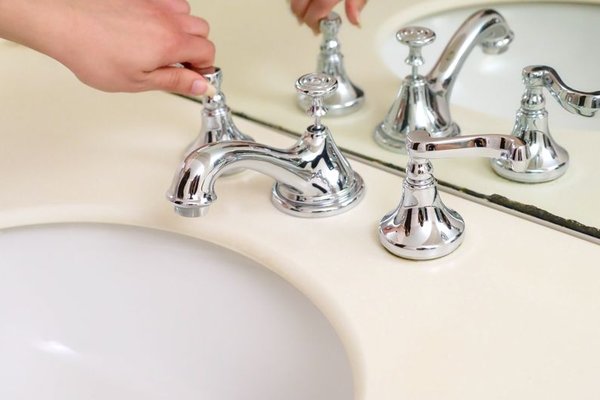
Stem Problems in Two-Handle Faucets
Some two-handle faucets use a threaded stem. Corrosion, damaged threads, worn washers, or a dry stem can make the handle difficult to operate. A faucet stem repair may involve cleaning the stem, replacing seals, or installing a new stem assembly.
Handle Hardware Is Too Tight or Misaligned
Not every hard to turn faucet has an internal valve problem. If the handle was recently removed, a set screw, retaining nut, or trim piece may be overtightened or rubbing. If the stiffness appeared immediately after a repair, inspect the handle assembly before replacing internal parts.
How to Diagnose the Problem
Notice where the resistance occurs. A handle that is stiff through its entire range often points to the cartridge or stem. A handle that catches at one position may suggest buildup, damaged internal surfaces, or misalignment. On a two-handle faucet, compare the stiff side with the working side.
Also look for related symptoms such as dripping, leakage around the handle, squeaking, reduced movement, or inconsistent temperature control. Those clues can help distinguish a simple handle issue from a cartridge or stem problem. Related topics such as fixing a dripping faucet, replacing a faucet cartridge, and low water pressure at the sink are also useful internal references for readers troubleshooting the same fixture.
Safe Steps to Fix a Stiff Faucet Handle
Turn Off the Water Supply
Close the hot and cold shutoff valves under the sink before removing the handle. Open the faucet afterward to confirm the water has stopped and to relieve pressure. If the shutoff valves do not close properly, deal with that issue before taking the faucet apart.
Remove the Handle Carefully
Look for a visible screw, small set screw, or decorative cap hiding the fastener. Use the correct screwdriver or hex key to avoid stripping it. If the handle does not lift off easily after the fastener is loose, do not force it. Mineral deposits can hold parts together, and excessive force can damage the finish or valve components.
Inspect the Cartridge or Stem
Once the handle is removed, check whether the exposed stem is also difficult to move. If the stem itself is stiff, the problem is probably inside the cartridge or stem assembly. Look for scale, corrosion, damaged seals, cracked plastic, or obvious wear. Take a photo before removal so you can restore the original orientation.
Clean Buildup Without Damaging Sealing Surfaces
Light mineral residue on removable parts can often be cleaned using a method suitable for the faucet material. Avoid aggressive scraping on sealing surfaces. Loose debris should also be cleared from the valve area before reassembly, following the faucet manufacturer’s instructions.
Use Only Compatible Lubricant
Some manufacturers recommend a small amount of silicone-based lubricant on particular cartridge seals or O-rings. Do not assume any household grease will work. Petroleum-based lubricants can react with some rubber components and may make movement worse. Use only the lubricant and locations specified for your faucet model.
Replace the Cartridge or Stem if It Still Binds
If cleaning does not restore smooth movement, replacement is often the most reliable repair. Match the part to the faucet brand and model because cartridges that look similar may not be interchangeable. Photographing the old part or checking the manufacturer’s model information can help prevent buying the wrong replacement.
A Practical Example
Suppose a kitchen faucet has become steadily harder to move for six months and now squeaks. After the water is shut off and the handle is removed, the cartridge stem is still difficult to rotate by hand. That tells you the handle itself is not the main problem. If the cartridge shows scale and remains stiff after appropriate cleaning, replacing it makes more sense than continuing to force the handle.
Repeatedly muscling a stiff handle can loosen hardware, damage the stem, or turn a manageable cartridge repair into a larger problem.
When to Call a Plumber
Professional help is sensible if the shutoff valves will not close, the cartridge is seized in the valve body, parts are heavily corroded, the faucet leaks below the sink, or you cannot identify the correct replacement component. A plumber can also help when the problem appears to involve supply connections rather than the faucet itself.
FAQ
Why is my faucet handle suddenly hard to turn?
A sudden change can result from debris, a damaged seal, corrosion, or a cartridge beginning to fail. If the faucet was recently repaired, an overtightened or misaligned handle is another possibility.
Can I use WD-40 on a stiff faucet handle?
Do not spray general-purpose lubricants into the cartridge unless the manufacturer specifically approves them. Many faucet seals require a compatible silicone-based lubricant, while petroleum-based products can damage some rubber components.
Do I need to replace the entire faucet?
Usually not. If the faucet body is sound, replacing a worn cartridge, stem, seal, or handle component can often restore smooth operation. Full replacement is more likely when the body is badly corroded, damaged, or obsolete and parts are unavailable.
How can I keep the handle from getting stiff again?
Do not force the handle, repair leaks promptly, and use the correct replacement parts. In hard-water areas, mineral deposits can return over time, so occasional inspection can catch stiffness before the cartridge becomes difficult to remove.
Conclusion
A faucet handle hard to turn usually points to resistance in the handle mechanism, cartridge, or stem rather than a need to replace the entire faucet. Start with simple observations, shut off the water before disassembly, inspect the moving parts, and follow the manufacturer’s repair guidance. Cleaning may solve light mineral buildup, while a worn cartridge or stem is usually better replaced. Fixing the cause early restores smooth operation and reduces the risk of damage from repeated force.