Low water pressure in the kitchen sink is one of those household problems that seems minor until it starts interrupting nearly everything. Filling a pot takes longer. Rinsing dishes becomes frustrating. The pull-down sprayer loses its force, and even washing vegetables feels slower than it should.
The good news is that fixing low water pressure in kitchen sink fixtures is often simpler than it first appears. In many cases, the problem comes from a blocked aerator, a partly closed valve, a kinked hose, or mineral buildup inside the faucet. Other situations may involve the home’s plumbing system and require a little more investigation.
The key is to work methodically. Before replacing parts or calling for repairs, it helps to identify whether the pressure problem affects only the kitchen faucet, only one side of the faucet, or the entire property.
Start by Checking the Rest of the House
The first step is to determine whether the kitchen sink is the only fixture with weak flow. Turn on a bathroom faucet, shower, or outdoor tap and compare the pressure.
If water pressure is low throughout the home, the kitchen faucet may not be the real problem. There could be an issue with the main shutoff valve, pressure regulator, incoming water supply, or a hidden leak. In some areas, temporary work by the local water provider can also reduce pressure.
When every other fixture works normally, the issue is probably located near the kitchen sink. That narrows the search considerably and makes a simple repair more likely.
It is also helpful to compare hot and cold water separately. If the cold side has strong pressure but the hot side is weak, the blockage may be in the hot supply line, shutoff valve, or water heater connection. If both sides are equally weak, the faucet outlet or internal cartridge becomes a stronger suspect.
Clean the Faucet Aerator
The aerator is the small screen attached to the end of the faucet spout. It mixes air with water, shapes the stream, and helps reduce splashing. Because all water passes through it, the aerator can collect rust particles, sediment, limescale, and other debris over time.
A blocked aerator is one of the most common causes of low pressure at a single faucet.
Unscrew the aerator by turning it counterclockwise. Some can be removed by hand, while others may require pliers. If using a tool, wrap the aerator with a cloth first to avoid scratching the finish.
Once removed, separate the small screens and washers carefully. Rinse away loose dirt and soak the parts in white vinegar to soften mineral deposits. A soft toothbrush can help remove buildup from the mesh.
Before reinstalling the aerator, briefly run the faucet without it. If the flow becomes strong, the aerator was almost certainly the source of the restriction. Clean it thoroughly or replace it if the screen is damaged or too clogged to restore.
Inspect the Shutoff Valves Under the Sink
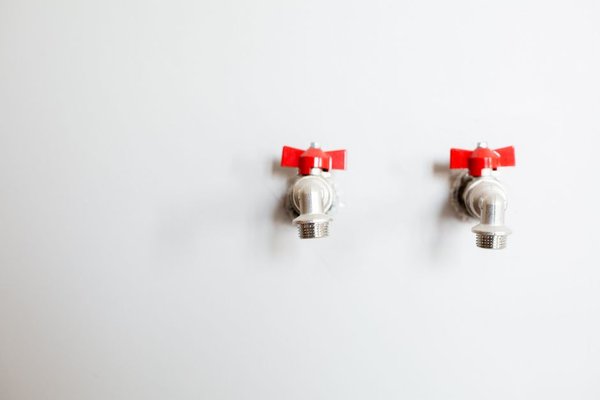
Kitchen sinks usually have two shutoff valves beneath the cabinet, one for hot water and one for cold. These valves allow the faucet supply to be turned off without stopping water throughout the house.
A valve may have been left partly closed after a repair, appliance installation, or cabinet work. Even a small restriction can noticeably reduce the flow at the faucet.
Turn each valve gently counterclockwise until it is fully open. Avoid forcing an old or stiff valve, as excessive pressure can damage the stem or cause a leak.
While checking the valves, look for corrosion, dampness, or signs of mineral buildup. Older shutoff valves can fail internally, allowing only a limited amount of water through even when the handle appears open. If one side of the faucet has weaker pressure than the other, a faulty valve may be responsible.
Examine the Supply Lines
Flexible supply lines carry water from the shutoff valves to the faucet. They are usually tucked inside the cabinet and can become twisted, bent, crushed, or kinked by stored items.
A kinked line works much like a bent garden hose. Water may still pass through, but the flow becomes noticeably weaker.
Clear the cabinet and inspect both lines from end to end. Make sure they curve naturally without sharp bends. Check that cleaning bottles, bins, or other objects are not pressing against them.
Supply lines can also develop internal blockages, particularly in homes with older plumbing or heavy sediment in the water. Testing them usually involves turning off the valves, disconnecting the lines, and allowing water to run into a bucket. This should be done cautiously, with towels nearby and the correct tools available.
If the lines are old, corroded, or damaged, replacing them is often more practical than trying to clean them.
Check the Pull-Down Sprayer Hose
Modern kitchen faucets often include a pull-down or pull-out spray head. These designs are convenient, but they add several places where water flow can become restricted.
The hose may be kinked beneath the sink, particularly near the counterweight that helps the spray head retract. The hose connection may also contain a small filter screen that traps debris. Some spray heads develop mineral buildup inside their nozzles, weakening both the stream and spray settings.
Pull the spray head out fully and observe the hose beneath the sink. Make sure it moves freely and is not wrapping around pipes or cabinet hardware.
Remove the spray head if the design allows it, then briefly test the water flow through the open hose. Strong flow from the hose suggests that the spray head itself is blocked. Weak flow means the restriction is farther back in the faucet or supply system.
Silicone spray nozzles can often be cleaned by rubbing them gently with a finger. More stubborn mineral deposits may respond to a short vinegar soak.
Consider a Clogged Faucet Cartridge
Inside a single-handle faucet, a cartridge controls the balance and flow of hot and cold water. Over time, tiny particles can lodge inside its narrow openings. Mineral deposits may also build up around the internal seals.
A clogged or worn cartridge can reduce pressure, create uneven hot and cold flow, or make the handle difficult to move. It may also cause dripping.
Accessing the cartridge usually requires turning off the water supply, removing the handle, and taking apart part of the faucet body. The exact process varies between faucet models, so it is important to keep track of every screw, cap, and retaining clip.
Some cartridges can be cleaned, but replacement is often more dependable. The new part must match the faucet model. Installing the wrong cartridge can lead to leaks or poor temperature control.
Because faucet components can be delicate, avoid forcing parts that do not move easily. Corrosion and mineral buildup sometimes make disassembly more difficult than expected.
Flush Sediment From the Faucet
Plumbing work elsewhere in the house can loosen rust, scale, or pipe debris. That material may travel through the supply lines and become trapped inside the kitchen faucet.
Flushing can help remove loose sediment. With the aerator or spray head removed, run both hot and cold water for a short period. Start slowly to prevent splashing.
For a more thorough flush, the supply lines may need to be disconnected from the faucet and directed into a bucket one at a time. This can reveal whether strong pressure reaches the faucet from the shutoff valves.
If pressure is strong at the supply line but weak after passing through the faucet, the blockage is inside the faucet assembly. If pressure is already weak at the valve, the issue lies farther upstream.
Look for Signs of a Plumbing Leak
Low water pressure can occasionally signal a leak. Under-sink leaks are often visible, but water can also escape inside a wall, beneath the floor, or elsewhere in the supply system.
Watch for damp cabinets, stained walls, warped flooring, musty smells, unexplained water sounds, or a water meter that continues moving when all fixtures are off.
A hidden leak should not be ignored. Beyond reducing pressure, it can damage building materials and encourage mould growth. When low pressure appears suddenly and no faucet blockage is found, checking for leakage becomes especially important.
Understand When the Problem Is More Widespread
If several fixtures have weak pressure, the main water valve may not be fully open. A failing pressure regulator can also lower pressure across the house.
Homes with older galvanized steel pipes may develop internal corrosion that gradually narrows the pipe diameter. In this case, the problem often worsens slowly and may affect certain areas more than others.
Another possibility is high demand. Pressure may temporarily drop when a washing machine, shower, dishwasher, and outdoor tap are being used at the same time. This is different from a permanent restriction, although it can reveal that the plumbing system has limited capacity.
Whole-house pressure issues are generally more complicated than a clogged kitchen faucet. They may require pressure testing and a closer inspection of the supply system.
Avoid Common Repair Mistakes
It is easy to turn a small pressure problem into a leak by rushing through the repair. Always close the shutoff valves before disconnecting hoses, cartridges, or supply fittings.
Use the correct size tools and avoid overtightening connections. A fitting should be secure, but too much force can damage threads, washers, and plastic components.
Take photos before disassembling unfamiliar faucet parts. This provides a useful reference when putting everything back together.
It is also wise to place a bucket and towels beneath the work area. Even after the valves are closed, a small amount of water usually remains inside the faucet and lines.
Restoring a Strong, Steady Kitchen Flow
Fixing low water pressure in kitchen sink plumbing usually begins with the simplest possibilities. Check other fixtures, compare hot and cold flow, clean the aerator, open the valves fully, and inspect the hoses. These basic steps resolve a surprising number of cases.
When the pressure remains weak, the investigation may move toward the spray head, supply lines, cartridge, or plumbing beyond the cabinet. The pattern of the problem often reveals where the restriction is located.
A strong kitchen faucet is easy to take for granted, but it plays a central role in everyday routines. Restoring proper flow is not only about convenience. It also helps uncover small plumbing issues before they become more disruptive. A careful, step-by-step approach usually leads to the cause—and, quite often, to a straightforward solution.