Why Leaky Kitchen Pipes Deserve Quick Attention
A kitchen is one of those rooms that quietly carries the weight of everyday life. It handles morning coffee, dinner prep, dishwashing, quick snacks, and the occasional late-night glass of water. So when something goes wrong under the sink or behind a cabinet, it can disturb the whole rhythm of the home. Leaky kitchen pipes may start as a small drip, but they rarely stay small for long.
At first, it may look harmless. A few drops under the sink. A damp patch near the cabinet floor. A faint musty smell that seems to come and go. Many homeowners wipe the area dry and hope the issue disappears. Unfortunately, water has a way of finding hidden spaces. It seeps into wood, flooring, drywall, and insulation. By the time the damage is visible, the repair may already be more complicated than expected.
Understanding what causes kitchen pipe leaks, how to spot them early, and when to call for professional help can save time, money, and a great deal of stress.
Common Places Where Kitchen Pipes Start Leaking
Most kitchen plumbing is tucked away, which is convenient until something begins to leak. The area under the sink is usually the first place people notice trouble. This space contains several connections, including the drainpipe, water supply lines, shut-off valves, and sometimes dishwasher or garbage disposal plumbing.
The drainpipe can loosen over time, especially if the sink is used heavily. Small shifts from water pressure, vibration, or accidental bumps from stored cleaning products may weaken the connection. When this happens, water may drip only when the sink is draining, making the leak easy to miss.
Supply lines are another common source of leaky kitchen pipes. These lines bring hot and cold water to the faucet. If a connection becomes loose or a hose begins to crack, the leak may continue even when the sink is not in use. This type of leak can be especially damaging because it may drip steadily throughout the day.
Dishwasher lines can also create problems. Since dishwashers are usually built into cabinetry, leaks may stay hidden behind or beneath the appliance. A slow leak from a dishwasher connection can damage flooring before anyone realizes what is happening.
Early Signs of Leaky Kitchen Pipes
Not every leak announces itself with a puddle. In many kitchens, the first warning signs are subtle. A cabinet floor may feel slightly soft. The area under the sink may smell damp. You might notice stains, peeling cabinet material, or a small patch of mildew near the wall.
Sometimes the sound gives it away. A faint dripping noise after the faucet is turned off can point to a loose fitting or cracked pipe. In other cases, your water bill may rise without any clear explanation. While kitchens are not always the only cause of a higher bill, hidden leaks are certainly worth checking.
Another sign is low water pressure at the kitchen faucet. This does not always mean there is a leak, but it can indicate a problem in the supply line or valve. If the pressure changes suddenly, it is better to investigate rather than ignore it.
The tricky thing about leaky kitchen pipes is that they often seem minor at first. That is why regular checks under the sink are useful. A quick look every week or two can reveal moisture before it turns into a larger issue.
Why Small Kitchen Leaks Become Bigger Problems
Water damage does not need a dramatic flood to become serious. A slow, steady leak can quietly weaken cabinets, attract pests, encourage mold growth, and damage flooring. Wood and particleboard are especially vulnerable because they absorb moisture and swell. Once cabinet bases begin to warp, they may not return to their original shape even after drying.
Mold is another concern. Kitchens already have warmth, organic material, and occasional moisture. Add a hidden pipe leak, and the conditions become ideal for mold and mildew. Besides the unpleasant smell, mold can affect indoor air quality and make the kitchen feel less clean, no matter how often it is wiped down.
Leaks near electrical appliances are also risky. Dishwashers, garbage disposals, and nearby outlets should never be exposed to ongoing moisture. Even a small leak around these areas deserves careful attention.
This is why delaying repairs usually costs more in the long run. A simple pipe connection repair can become a cabinet replacement, flooring repair, or mold cleanup if left unresolved.
What Homeowners Can Check Safely
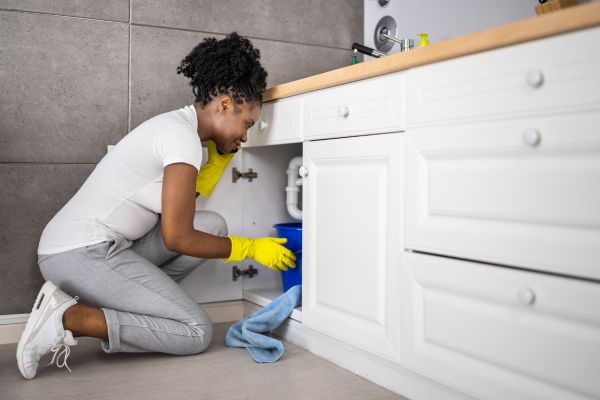
There are a few simple checks homeowners can do before deciding the next step. Start by clearing the area under the sink. Dry the cabinet floor completely, then run the faucet and watch the drainpipe closely. If water appears only while the sink is draining, the issue may be related to the drain assembly, trap, or pipe connection.
Next, check the supply lines. Look at the hoses and valves connected to the faucet. If water is dripping from a connection even when the faucet is off, the supply side may be leaking. It is also useful to feel gently around the connections with a dry paper towel because tiny leaks are sometimes easier to detect this way.
For kitchens with garbage disposals, inspect around the disposal unit and the connections leading into it. Leaks may come from the sink flange, the discharge pipe, or the dishwasher hose connection. With dishwashers, look for dampness near the front base of the appliance or water appearing after a wash cycle.
These checks are meant for observation, not risky repair work. If water is spraying, pooling quickly, or leaking near electricity, the safest step is to turn off the water supply and contact a plumbing professional.
Temporary Fixes Are Not Long-Term Repairs
It is tempting to wrap a leaking pipe with tape, tighten a nut, or place a bucket underneath and move on. Sometimes a temporary fix can reduce immediate damage, especially if you are waiting for proper repair. But temporary measures should not be mistaken for a solution.
Tape may slow a drip, but it will not correct a cracked pipe, failing seal, or worn-out connection. Buckets fill up, towels stay damp, and small leaks often spread. Even if the visible dripping stops for a while, moisture may still be escaping behind the wall or cabinet.
The better approach is to treat temporary fixes as short-term damage control. They may buy a little time, but the actual cause still needs to be identified. A properly repaired kitchen pipe should remain dry under normal use, without needing towels, containers, or repeated tightening.
When Professional Plumbing Help Makes Sense
Some kitchen pipe problems are simple, but many are not as straightforward as they look. A leak may appear to come from one spot while the real issue is higher up or farther back. Water travels along pipes, cabinet surfaces, and walls before dripping down, which can make the source difficult to locate.
Professional plumbers have the tools and experience to trace the leak accurately. They can check fittings, seals, valves, drain assemblies, garbage disposal connections, dishwasher lines, and hidden pipe sections. More importantly, they can determine whether the problem is isolated or part of a larger plumbing issue.
Professional service is especially important if the leak keeps returning after small adjustments, if pipes are corroded, if there is visible mold, or if water has reached flooring or walls. It also makes sense when older plumbing materials are involved. Aging pipes may need more than a quick repair, particularly if multiple connections are beginning to fail.
A careful repair does more than stop the drip. It helps protect the kitchen from repeat damage and gives homeowners confidence that the issue has been handled properly.
Preventing Future Kitchen Pipe Leaks
While not every leak can be prevented, regular care makes a difference. Avoid overloading the cabinet under the sink, since heavy bottles and cleaning supplies can bump pipes and loosen connections. Keep the area organized enough that leaks are easy to spot.
Be mindful of what goes down the drain. Grease, food scraps, coffee grounds, and thick sauces can contribute to clogs. A blocked drain can increase pressure on pipe joints and lead to leaks around weaker areas. Even with a garbage disposal, it is better to use the drain thoughtfully.
Check dishwasher and faucet connections occasionally, especially after installation, renovation, or appliance movement. If a cabinet floor liner is used, make sure it does not hide standing water. Liners can be helpful, but they should be lifted now and then to check for moisture underneath.
It is also wise to replace worn hoses, washers, and fittings before they fail completely. Plumbing parts do not last forever. Small maintenance steps can prevent a surprising amount of trouble.
The Real Value of Repairing Leaky Kitchen Pipes Early
Leaky kitchen pipes are more than a household inconvenience. They are a warning sign. Sometimes the fix is simple, and sometimes it points to a deeper issue in the plumbing system. Either way, early attention is always better than waiting for visible damage.
A dry kitchen cabinet, steady water pressure, clean air, and protected flooring are easy to take for granted until a leak interrupts them. By noticing early signs, checking common problem areas, and seeking professional repair when needed, homeowners can keep the kitchen safe, functional, and comfortable.
In the end, pipe repair is not just about stopping water from dripping. It is about preserving the space where daily life happens. A kitchen works best when everything beneath the surface is working quietly, reliably, and without hidden damage waiting to appear.