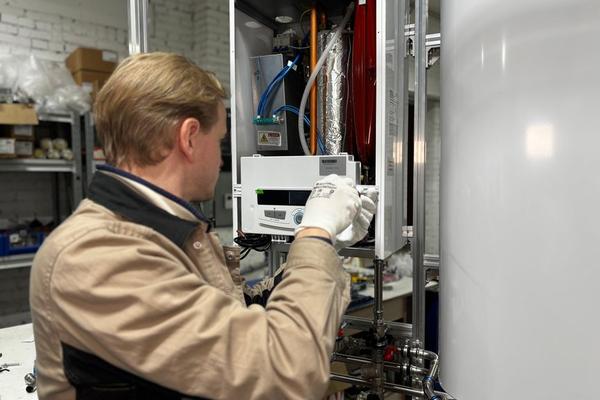
A puddle beneath a water heater does not tell you where the leak began. Water can run down the outside of the tank from a loose connection, drip from a drain valve, or escape through a corroded inner tank. If your water heater is leaking from the bottom, identifying the source is the difference between a manageable repair and a necessary replacement.
The situation deserves prompt attention, but not every wet base means the heater is ruined. Start with safety, then look for the first point where water appears.
What to Do First When You Find Water
Keep people away from standing water near electrical equipment. If you have an electric water heater, turn off its dedicated circuit breaker only if you can reach the panel safely. On a gas heater, use the manufacturer’s instructions to set the gas control to OFF. If you smell gas, leave immediately and contact the gas utility or emergency services from a safe location.
Close the cold-water inlet valve supplying the heater if it is safe and accessible. If water keeps flowing, use the home’s main water shutoff. Protect nearby belongings and arrange prompt service. Do not restart the heater until the issue is resolved and the tank is properly filled; running an electric heater dry can damage its elements.
Why Water Collects Around the Bottom
Water follows gravity, so a leak at the top can create a puddle at the base. Inspect visible exterior connections with a flashlight, without removing electrical panels or disturbing gas fittings. Dry accessible areas with paper towels and watch for the first place moisture returns. Never touch hot discharge water or reach into wet electrical areas.
Drain Valve Leakage
The drain valve is mounted low on many storage heaters. A water heater drain valve leak may produce droplets at the outlet, handle or threaded connection. Because of its position, the water usually falls directly onto the floor or into the drain pan.
After a recent draining or flushing, the valve may not be fully closed. Check its position visually, but do not force a damaged valve. A worn seal or cracked valve can often be replaced by a qualified technician after the tank is safely isolated and drained.
Discharge From the Pressure Relief Valve
The temperature and pressure relief valve is a critical safety device. Its discharge pipe commonly extends toward the floor, making released water look like a water heater bottom leak.
Discharge can result from high supply pressure, thermal expansion during heating, excessive temperature or a faulty valve. Do not cap the pipe or block the valve. A plumber should investigate why it is releasing water before replacing any component.
Water Traveling Down From a Fitting
Check visible hot- and cold-water connections near the top of the heater. A damp fitting can send water down the outer jacket without leaving an obvious trail. On electric storage heaters, a failed heating-element gasket can also cause leakage, although inspection behind the access cover belongs to a qualified professional.
For example, suppose a puddle appears every morning, but a dry paper towel held beneath the cold-water connection becomes damp first. That evidence points toward a supply connection, not necessarily a hole in the tank.
Condensation After Heavy Hot-Water Use
Some gas water heaters form condensation when cold incoming water cools internal surfaces and the burner operates. Drips may appear near the base after a long shower or when a heater starts up. Pipes can also sweat in humid rooms.
Temporary moisture may disappear as the heater warms. Persistent pooling, worsening drips or dampness when the unit has not been operating should not be dismissed as harmless condensation.
Corrosion Inside the Storage Tank
A genuine water heater tank leak develops when the inner tank loses its integrity, commonly through corrosion. Rust staining around the lower jacket, water emerging from beneath the casing and repeated pooling after external sources are excluded are warning signs.
These clues are not proof by themselves: insulation can conceal the origin, and rust on nearby fittings can be misleading. If a technician confirms that the pressurized inner tank is leaking, the usual safe remedy is replacement. Sealants or surface patches cannot reliably restore a failed storage tank.
How to Tell a Repairable Leak From Tank Failure
The most useful question is whether the leaking part is separate from the tank. Drain valves, pipe connections, certain gaskets and relief valves are serviceable components. Replacing one may resolve the problem, although pressure-related relief discharge requires the underlying pressure issue to be fixed as well.
A leaking hot water tank with a breached inner wall is different. Replacing a valve will not fix corrosion inside the vessel. Before deciding, ask a technician to identify the source, explain the proposed repair and review the heater’s age, condition and warranty.
If you are comparing symptoms, a water heater troubleshooting guide can help organize your questions. If replacement is required, reviewing how to choose the right water heater size can help you avoid buying in a hurry.
Give the Technician a Better Starting Point
Take photographs of the puddle, drain valve and visible plumbing connections, provided you can do so safely. Record whether the water appeared during reheating, after several showers or continuously. Note whether closing the inlet stopped the leak. These observations can narrow the possibilities without risky disassembly.
Locate the model and serial number on the manufacturer’s label if accessible. The details can help the service provider check parts compatibility and warranty coverage before arriving.
Preventing Another Leak
Look around the heater periodically for new drips, rust or damp flooring. Keep the drain pan and its drainage path clear where installed. Follow the model-specific water heater maintenance checklist, including professional assessment of the anode rod when applicable and flushing recommendations suited to local water conditions.
Have unusual relief-valve discharge investigated promptly. Sediment removal may support maintenance, but flushing cannot repair a corroded tank that already leaks.
Frequently Asked Questions
Can I use a water heater that is leaking from the bottom?
Do not continue operating an actively leaking heater until its source is identified. A tank breach may worsen, and water around electrical or gas controls adds risk.
Does a puddle under the heater always mean replacement?
No. Water may come from a drain valve, relief discharge pipe, pipe fitting or condensation. Replacement is generally needed when the inner storage tank itself has failed.
Can I patch a leaking hot water tank?
Do not rely on a patch or sealant for a corroded, pressurized inner tank. A separate defective valve or fitting may be repairable, but confirmed tank failure calls for replacement.
Why does the leak appear only after a long shower?
Cold replacement water may cause temporary condensation in some gas models. Reheating can also increase pressure and trigger relief-valve discharge. Repeated moisture should be checked rather than guessed at.
The Bottom Line
When water collects under a heater, trace the first wet point before assuming the tank has failed. A leaking valve or fitting may be fixable, but a confirmed inner-tank breach is a replacement issue. Shut the equipment down safely, limit water damage and seek professional diagnosis if the source is uncertain.